The Chocolate-Coated Oreo-Chip Yoghurt Treat and the History of Red Mango and the Philippine Ice Cream Industry
- Iñigo Luis Corpuz
- Jul 19
- 3 min read

Ice cream has been a staple in the Philippine confectionery market. Well-renowned local brands like Selecta and Magnolia have been endearing Filipino hearts and taste buds for decades. The former was founded in 1933 by the Arce family, while the latter made its mark in 1925 as San Miguel Corporation’s staple dairy line. Selecta’s current heartbrand logo is directly influenced by that of Wall’s, a multinational ice cream behemoth that hails from Great Britain. The current Selecta logo was adopted in the Philippine retail market in 1999. Interestingly, Nestlé did not venture into the ice cream industry until 1994, the year it collaborated with Magnolia. The latter was highly instrumental in imparting the fundamentals of ice cream production to the former, which specialized in milk-centered products like Bear Brand and Milo. Hence, the creation of the short-lived Magnolia-Nestlé brand, which lasted until 1998. Now that Nestle Philippines operates its very own ice cream department, the multinational giant already has the necessary instruments in producing and distributing ice cream tubs and cups at major supermarkets and convenience stores nationwide. Of course, the same thing applies to the other two giants, Magnolia and Selecta.
Consumers regularly encounter these prominent names from supermarkets, convenience stores, and mainstream media via advertisements. Apparently, these brands employ powerful marketing tactics centered around family-orientedness and the youthful endorsers and commercial models who make ice cream consumption an acceptable post-meal habit. However, not all consumers are aware of the humble origins of this cold-tempered dessert.
In the Asian context, ice cream made its debut in civilizations like China. Within the years 618-907, the Tang Dynasty welcomed the idea of incorporating various types of milk of different herbivores (e.g., cow, buffalo, goat) into one creamy mixture. This concoction, when refrigerated properly with sufficient salted ice cubes, gave birth to the formulation of the ice cream we purchase and enjoy today. As seen in an ice cream’s baseline formulation, milk serves as the foundational ingredient in elevating ice cream as a worldwide dessert staple, which has been admired by millions of consumers across various generations.
Hailing from South Korea, Red Mango found its footing in the Philippines in 2009, seven years after its founding. Unlike the typical ice cream brands that offer high milk fat content flavors, this Asian brand opts to take the opposite route by introducing non-fat frozen yogurt to its worldwide market, including the Philippines. This nutritional intention is meant to promote a less guilty way of enjoying desserts after full-course meals to customers, especially those who are vulnerable to life-threatening diseases like diabetes. Other than the frozen yogurt itself, delectable toppings are integrated as ways to entice target audiences to customize their frozen treat experiences based on their taste preferences. Chocolate chip, Oreo cookie bits, mango, and cheesecake are the classic examples of topping options that Red Mango affords to frozen yogurt lovers in the Philippines, South Korea, and the broader dessert landscape.
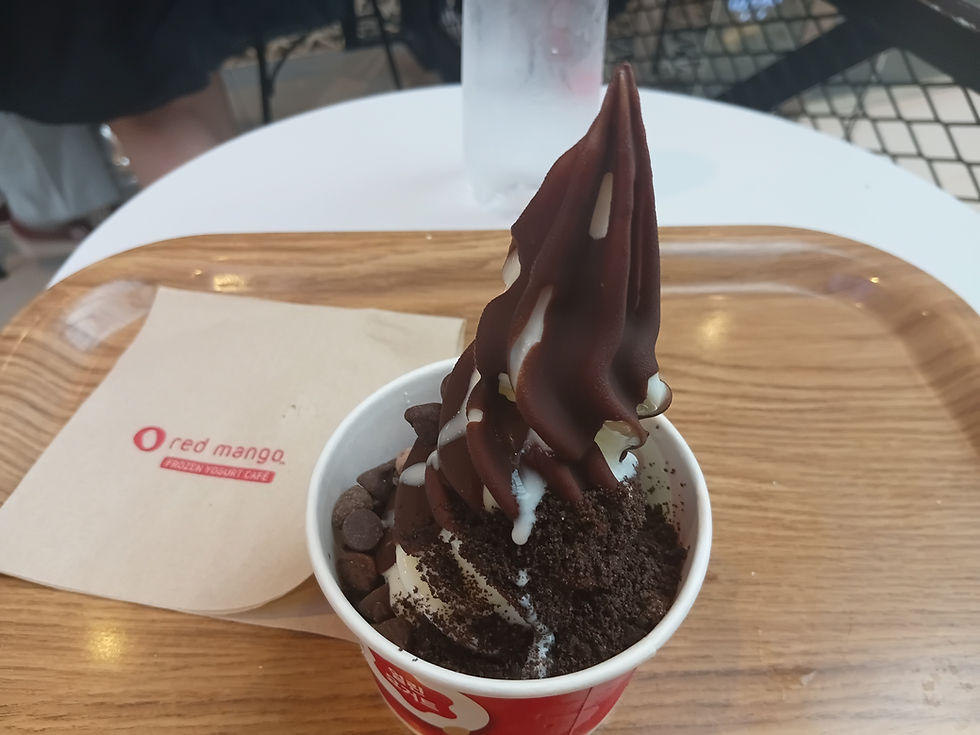
The above photo contains the South Korean chain’s chocolate-coated and Oreo-dressed frozen yogurt, which was purchased at the Red Mango Eastwood branch located on the fourth floor. As expected, it had the usual yet tempting taste of chocolate, which was courtesy of the toppings I selected at that time. It was a pleasurable experience tasting the indulgence of the creaminess of yogurt and the lusciousness of chocolate in one cup.

Comments